
Statistical Analysis & Experiment Design
Test Ideas the Right Way, from Design to Decision
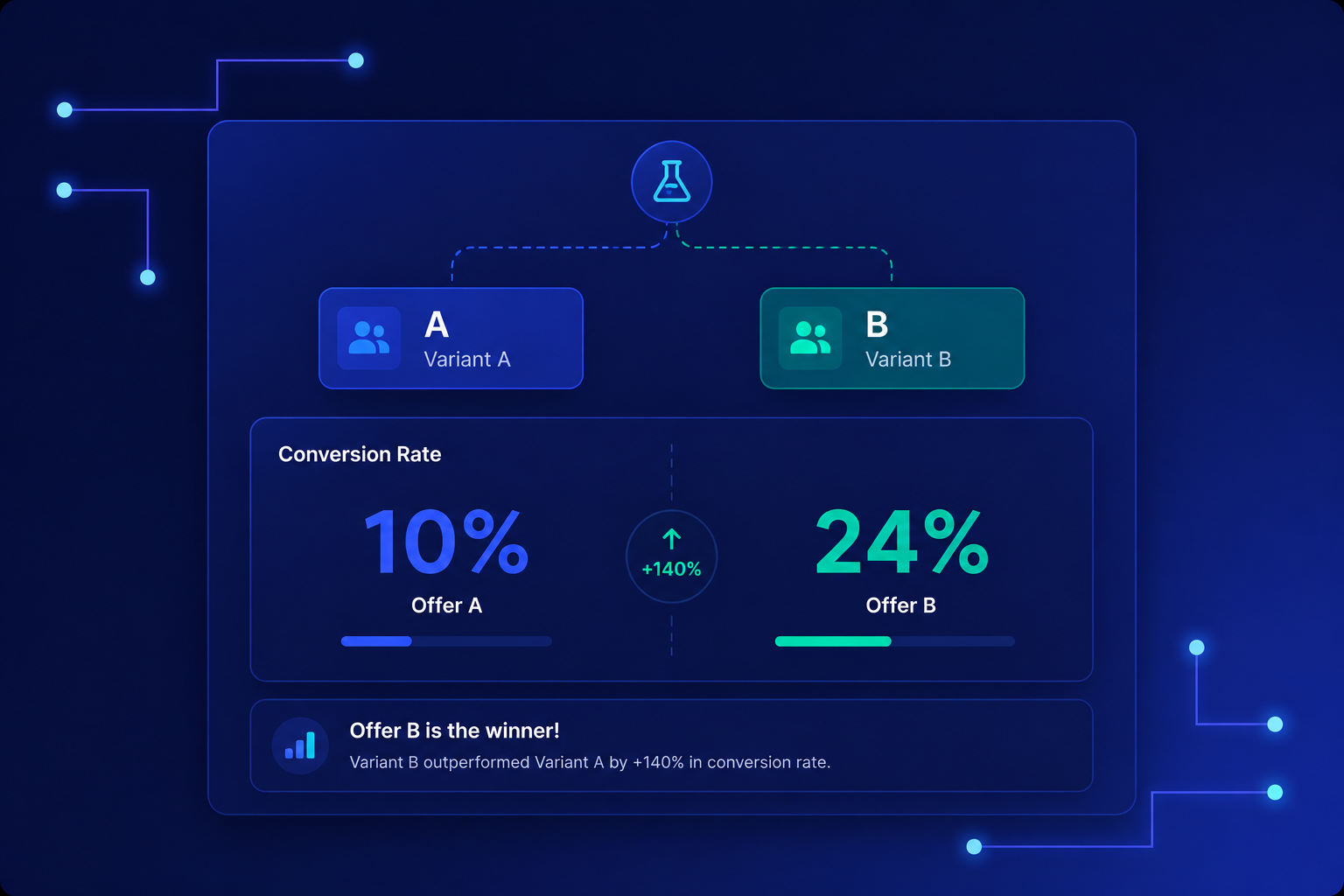
Making changes to a product, website, or process without testing them properly can lead to misleading conclusions. Statistical analysis and experiment design — including A/B testing — helps you test ideas in a structured way.
It applies to website designs, pricing strategies, marketing messages, or process changes — anywhere you need confidence that what you're seeing is a real effect, not noise.
The goal isn't just running a test. It's designing it to answer the right question with a clear, statistically sound conclusion.
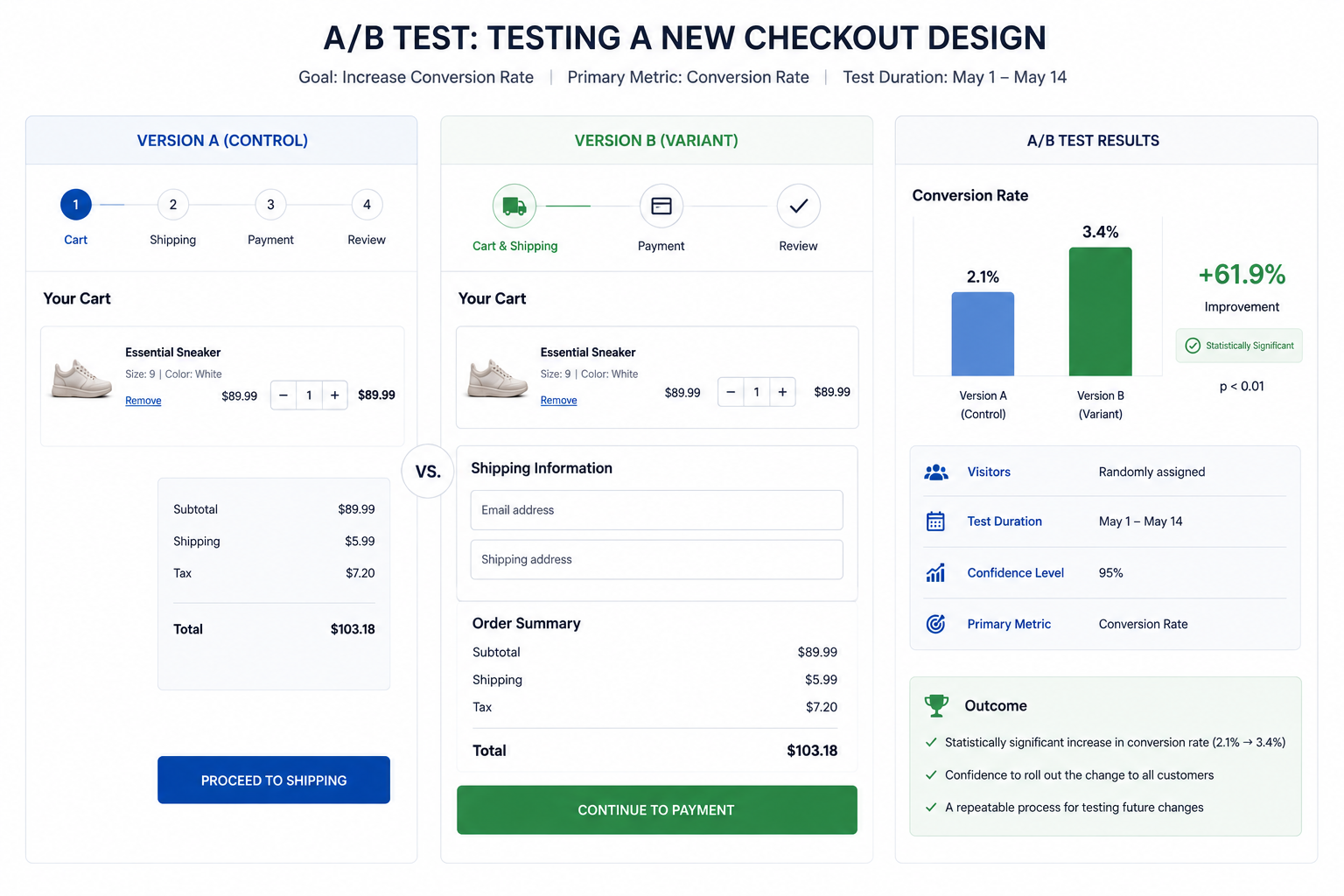
Testing a New Checkout Design for an E-commerce Retailer
An e-commerce retailer wanted to reduce cart abandonment with a simplified checkout — but redesigning it is a real investment, and rolling it out without evidence carries risk.
An A/B test compared the new flow against the existing one: sample size was calculated up front, conversion rate was the primary metric, and visitors were randomly assigned over a fixed period to avoid seasonal bias.
- Statistically significant increase in conversion rate (2.1% → 3.4%)
- Confidence to roll out the change to all customers
- A repeatable process for testing future changes
Try it yourself: a simple A/B testing calculator
Enter your test's numbers and see whether the difference is statistically significant — free, no account needed.
Group A
Group B
Common questions
How is this calculation made?
The calculator compares the results from Group A and Group B using a standard statistical test that checks whether the difference you're seeing is a real effect, or could just be random chance.
What if I want to test more than two options, or something other than a simple yes/no result?
This calculator is built for the most common case: comparing two versions on a clear yes/no outcome, like "did they convert or not." If you want to test several versions at once, or a different kind of result like revenue or time spent, that's a more complex design — get in touch and we can help.
Why does designing the test properly matter so much?
Running a test without planning it first is one of the most common ways businesses end up with misleading results — stopping too early, testing too few visitors, or not accounting for unobserved effects. Getting the design right before you launch is what makes the result afterward something you can actually trust.
Interested in designing experiments to test your next idea?
Get in touch to start testing with confidence.