Description
Customer Churn Predictive Model — Jupyter Notebook (Python)
Losing customers quietly, without noticing until the revenue impact is already significant, is one of the hardest problems to manage in a repeat-purchase business. This notebook builds a working churn prediction model from your own purchase history — using scikit-learn — and walks through every step, from defining what “churn” actually means for your business, through to a final list of your current customers ranked by churn risk.
What’s included:
- A fully commented Jupyter Notebook (.ipynb), broken into clear, explained steps
- A data-driven method for defining your churn horizon, rather than guessing an arbitrary cutoff
- Feature engineering using Recency, Frequency, and Monetary Value (RFM), split by product category
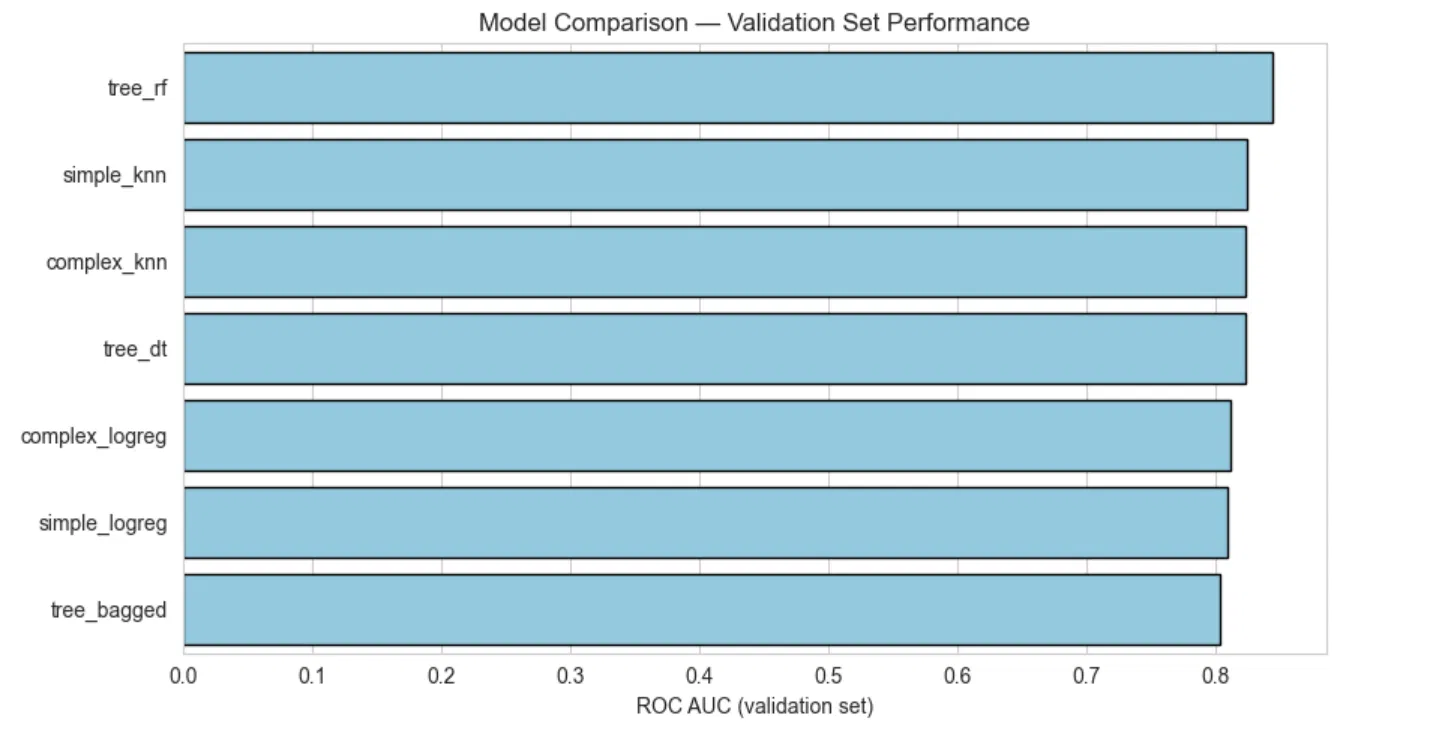
- A comparison across five modeling approaches — Decision Tree, Bagged Trees, Random Forest, K-Nearest Neighbors, and Logistic Regression
- A final, ready-to-run script that scores your current customers by predicted churn risk
How it works:
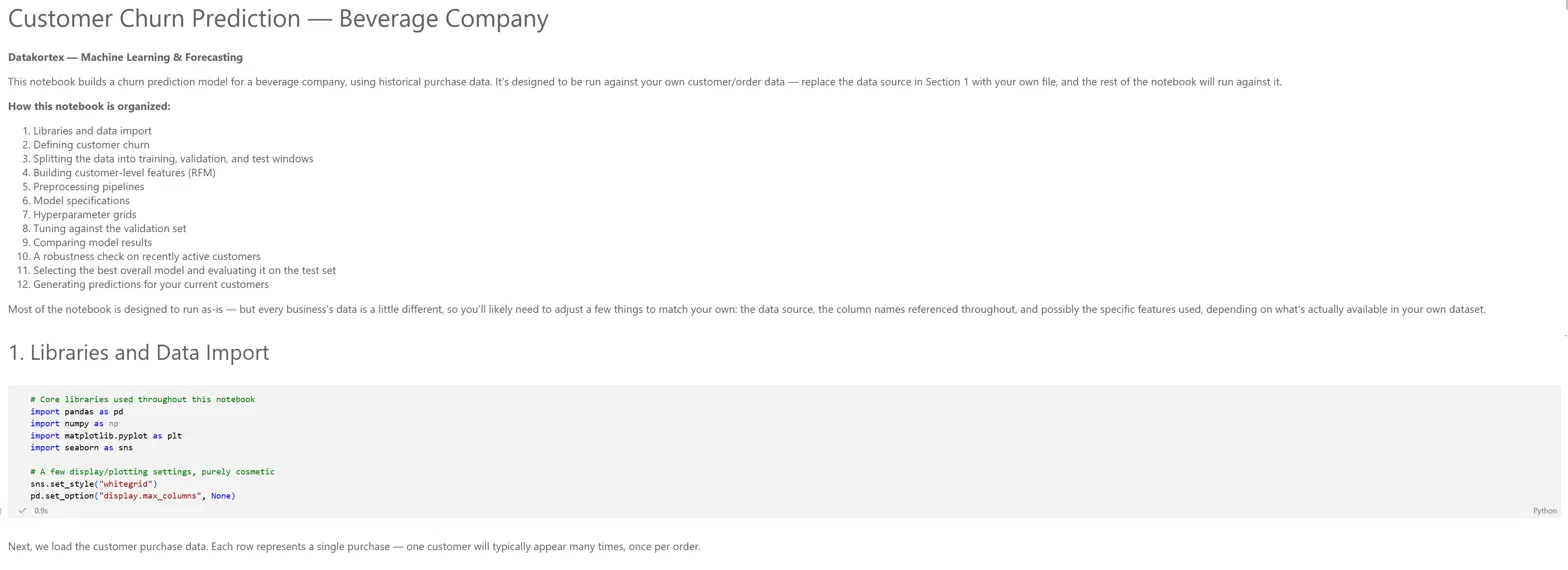
The notebook is built around your own purchase-level transaction data — one row per purchase. It walks through defining churn, building customer-level features, comparing models on a proper time-based validation split, and finally generating a ranked churn-risk list for your current customers. Each step includes a plain-language explanation of what’s happening and why.
Please note: this notebook is provided as working code you run yourself, not a hosted service — you’ll need a Python environment (such as Jupyter, Google Colab, or Anaconda) to run it. Basic familiarity with running Python code is helpful, since you’ll need to load your own data in and run each step. Every business’s data looks a little different, so you should expect to adjust column names — and possibly which features are used — to match what’s actually available in your own dataset.
Recommended fields — your purchase data should ideally include:
- Customer ID
- Purchase date
- Product category
- Revenue per purchase
- Purchase channel
- Customer tier
- Customer segment
Enough purchase history is needed to establish a reliable sense of each customer’s typical buying pattern — a longer history generally produces a more reliable model.
Format: Delivered as a .ipynb Jupyter Notebook file.
Requires a Python environment (Jupyter, Google Colab, or Anaconda) to open and run.